October 31, 2026
Why You Still Need an Area Code Directory for Phone Lookups
By @areacodedirectorylife
I remember the first time I got a call from a number I did not recognize. It was the mid-2000s, and my landline rang with a 312 area code. I had no idea who it was, so I flipped open a dog-eared White Pages book sitting on my desk. That book, essentially a printed area code directory, told me 312 belonged to Chicago. But the number itself was useless without a name attached. Fast forward to today, and the problem has only gotten more complex. We carry smartphones that can pull up caller ID from apps like Truecaller or Whitepages in seconds, yet the underlying system that assigns those digits still relies on a surprisingly old framework. Understanding that framework - the North American Numbering Plan, or NANP - is the key to making sense of any area code directory you use, whether it is a printed booklet or a digital reverse phone lookup service.
The NANP was created in 1947 by AT&T and the Bell System to standardize long-distance dialing across the United States, Canada, and parts of the Caribbean. Before that, every local exchange carrier had its own way of routing calls, and a caller in New York could not just dial a number in Los Angeles without an operator. The plan divided the continent into numbering plan areas, each identified by a three-digit area code. The first digit could not be a 0 or 1, and the second digit was always a 0 or 1 until the 1990s, when the system ran out of combinations. Today, the North American Numbering Plan Administration, a neutral body, oversees the assignment of area codes and central office codes to ensure no two telephone exchanges use the same prefix. If you ever look up a number using a reverse phone lookup service like Spokeo or ZabaSearch, you are essentially querying a massive, dynamic area code directory that maps each ten-digit string to a carrier and a geographic region.
How Area Codes Actually Work
Every phone number in the NANP follows the same structure: a three-digit area code, a three-digit central office code (the exchange), and a four-digit line number. The central office code used to correspond to a physical switch owned by a local exchange carrier like Verizon or CenturyLink. If you lived in a small town, your telephone exchange might have been shared by everyone on your block. When you dialed a neighbor, the call never left that switch. Today, number portability has blurred those lines. You can keep your 212 number even if you move to Florida, but the underlying routing still depends on the original assignment. That is why an area code directory that only lists geographic regions can be misleading. A reverse phone lookup service, such as PhoneValidator or Truecaller, uses more than just the area code; it cross-references the full number against carrier databases and user-contributed data to give you a current name or location.
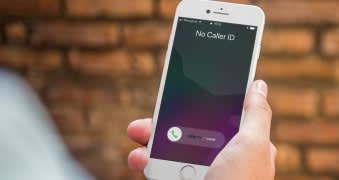
The shift from landlines to mobile phones changed everything. When Bell Atlantic, which later became Verizon, first offered cellular service in the early 1990s, mobile numbers were assigned to the same pool as landlines. But as T-Mobile and Sprint grew, the demand for new area codes exploded. The North American Numbering Plan Administration introduced overlay area codes - multiple codes serving the same geographic region - to conserve numbers. In cities like Los Angeles, you might have a 213, 323, or 310 number, all covering overlapping territory. A printed area code directory from ten years ago would be obsolete for those regions. Digital directories update constantly, which is why services like Whitepages and Spokeo remain useful for identifying callers from unfamiliar prefixes.
Why an Area Code Directory Matters for Reverse Lookups
When you run a reverse phone lookup, the first step is identifying the area code. That narrows the search from hundreds of millions of numbers to a few million. But the real work happens at the exchange level. Each central office code - the next three digits - is assigned to a specific local exchange carrier. If you see a number starting with 212-555, the 555 exchange tells you it is a test line, not a real subscriber. Practical examples like that are why a good area code directory is not just a list of cities. It includes the carrier names, the effective date of the exchange, and sometimes the type of service (landline, VoIP, wireless).
I once had a client who kept getting spam calls from a 917 number. He tried a free online lookup and got nothing useful. I ran the same number through a paid reverse phone lookup service that had access to a detailed area code directory. It showed the number belonged to a T-Mobile prepaid line activated in New York, but the caller had ported it from a Sprint account. Without that directory, the connection would have been invisible. This is the difference between a simple caller ID display and a proper investigation. The NANP framework ensures that every number can be traced back to a responsible carrier, even if the subscriber's name is not public.
How the NANP Structure Affects Your Search
The NANP is not just a numbering plan; it is a regulatory system. The Federal Communications Commission delegates number administration to the North American Numbering Plan Administration, which in turn works with pooling administrators and thousands of local exchange carriers. When a new area code is needed, the administration runs a relief planning process that can take years. Overlays are now the standard method because they do not require existing customers to change their numbers. For anyone doing a reverse phone lookup, this means the same area code can cover vastly different regions depending on the overlay. A 2018 area code directory that lists only one city per code will be wrong for many numbers.

Take 832 as an example. It is an overlay for Houston, Texas, alongside 281 and 713. If you look up a 832 number, the area code alone tells you it is in the Houston metro area. But the exchange prefix 832-555 might belong to a specific carrier's switch in a suburb. A sophisticated directory like the one used by PhoneValidator or Whitepages drills down to the rate center - a geographic boundary defined by the local exchange carrier for billing purposes. That level of detail is what separates a basic list from a usable tool.
Practical Tips for Using Area Code Directories
If you are trying to identify a caller, start with the area code. Use an online area code directory to confirm the general region. Then check the exchange prefix against carrier records. Most free directories only give you the city and state. Paid services like Spokeo or Truecaller maintain their own databases that include porting history and user reports. Here are a few things to keep in mind:
- Always verify the area code against the NANP's official list, which is maintained by the North American Numbering Plan Administration. Look for overlays that may not appear in older directories.
- If you see a number from an area code that was recently created, like 983 in New York, expect that many free directories will not have it. Paid reverse phone lookup services update their data monthly.
- Be aware that numbers from VoIP providers like CenturyLink's digital voice service may show a different location than the user's physical address.
- Use the exchange prefix to determine the local exchange carrier. For example, a 555 exchange is reserved for test numbers, while a 311 exchange is for non-emergency services.
- Cross-reference the number with multiple sources. A single directory might miss a ported number.
The Future of Area Code Directories
As the NANP approaches exhaustion - the last available area codes will be assigned in the next decade or two - the North American Numbering Plan Administration is considering expanding to eleven-digit dialing or even introducing new country codes. For now, the system works well enough, but it requires constant maintenance. An area code directory that relies on static data will fail. Services like Whitepages and ZabaSearch have moved to real-time lookups that query carrier databases on demand. This is why a reverse phone lookup is often faster and more accurate than flipping through a printed book, though the book still has its uses for understanding the history of a number.
I keep a small printed area code directory in my desk drawer, mostly out of nostalgia. But for actual work, I use a combination of caller ID on my phone and a web-based reverse phone lookup service. The digital tools are faster and they handle ported numbers, which printed books cannot. Still, the underlying logic is the same: every number belongs to a specific exchange, which belongs to a specific area code, which belongs to the NANP. Knowing how that hierarchy works makes you a smarter user of any phone lookup tool, whether it is a free app or a paid service like PhoneValidator.

If you ever need to track down a caller, do not skip the basics. Start with an area code directory to understand the geography and carrier. Then use a reverse phone lookup to get the subscriber information. The combination of both approaches gives you the best chance of identifying that unknown number, even when the caller has blocked their caller ID or ported their line to a different provider.
❧